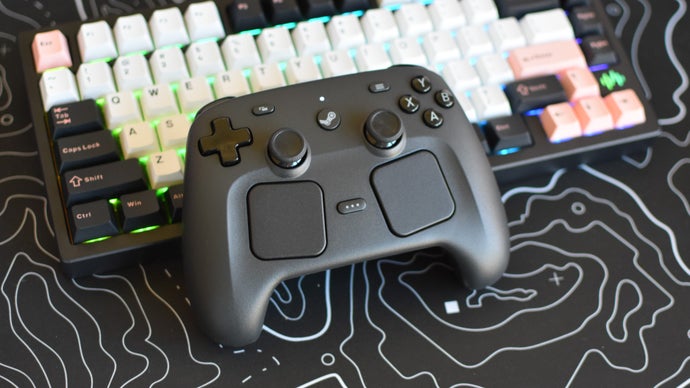
Valve is preparing to launch its new Steam Controller on May 4th, entering a peripheral market long dominated by console-bred gamepads from Xbox and PlayStation. In interviews with Rock Paper Shotgun, Valve designer Lawrence Yang and engineer Steve Cardinali discussed why a PC-first controller remains such a rarity — and admitted they don’t entirely understand it either. “I actually don’t know why!” Yang said with a laugh, before adding that the gap in the market was exactly what motivated Valve to build one.
The challenge, Cardinali explained, is that any PC-focused gamepad must carve out space between products already entrenched in the hands of millions of players. Valve’s own data from a 2024 blog post on Steam Input showed that roughly 59% of controller sessions on Steam used Xbox controllers, 26% used PlayStation hardware, and about 10% came from Steam Deck users. With most players content to repurpose a console pad they already own, convincing them to invest in something new requires offering genuinely novel capabilities rather than incremental improvements.
Valve believes it has done exactly that. The new Steam Controller borrows its fundamental shape from the Steam Deck but introduces several hardware upgrades under the surface. Chief among them are TMR (Tunneling Magnetoresistance) thumbsticks, which use magnetic sensing rather than traditional potentiometers, promising greater precision and resistance to stick drift. A revamped D-pad and a new feature called Grip Sense — pressure sensors embedded in each grip that can trigger gyro aiming or be remapped to any function — round out the headline additions.
Perhaps more intriguing than the controller itself is where its technology could end up next. As Rock Paper Shotgun reports, both Yang and Cardinali indicated that the Steam Controller’s innovations are being evaluated for a future Steam Deck revision. Cardinali called the TMR thumbsticks a prime candidate, noting that if they prove successful in the controller, Valve would likely carry them forward into its handheld line. Grip Sense also drew enthusiasm, with the team already discovering uses beyond its original gyro-aiming purpose, such as opening and navigating weapon wheels with a simple squeeze and release.
Yang framed this iterative approach as core to how Valve develops hardware. “Every piece of hardware we make builds on the thing we made before, and everything new that we make takes all of the learnings, whether good or bad, from previous hardware, and integrates it into it,” he said. A next-generation Steam Deck, he confirmed, would follow the same philosophy — though Valve stopped short of making any formal announcement, and component shortages affecting other projects like the Steam Machine and Steam Frame VR headset suggest a successor handheld is still a distant prospect.
For now, the immediate test is whether PC gamers will see enough value in a controller designed specifically for their platform to look beyond the Xbox and DualSense pads already sitting on their desks. Valve is betting that features like drift-resistant sticks and novel grip inputs represent more than marginal gains — and that what it learns from players’ response will shape not just the controller’s future, but the next generation of its portable hardware as well.