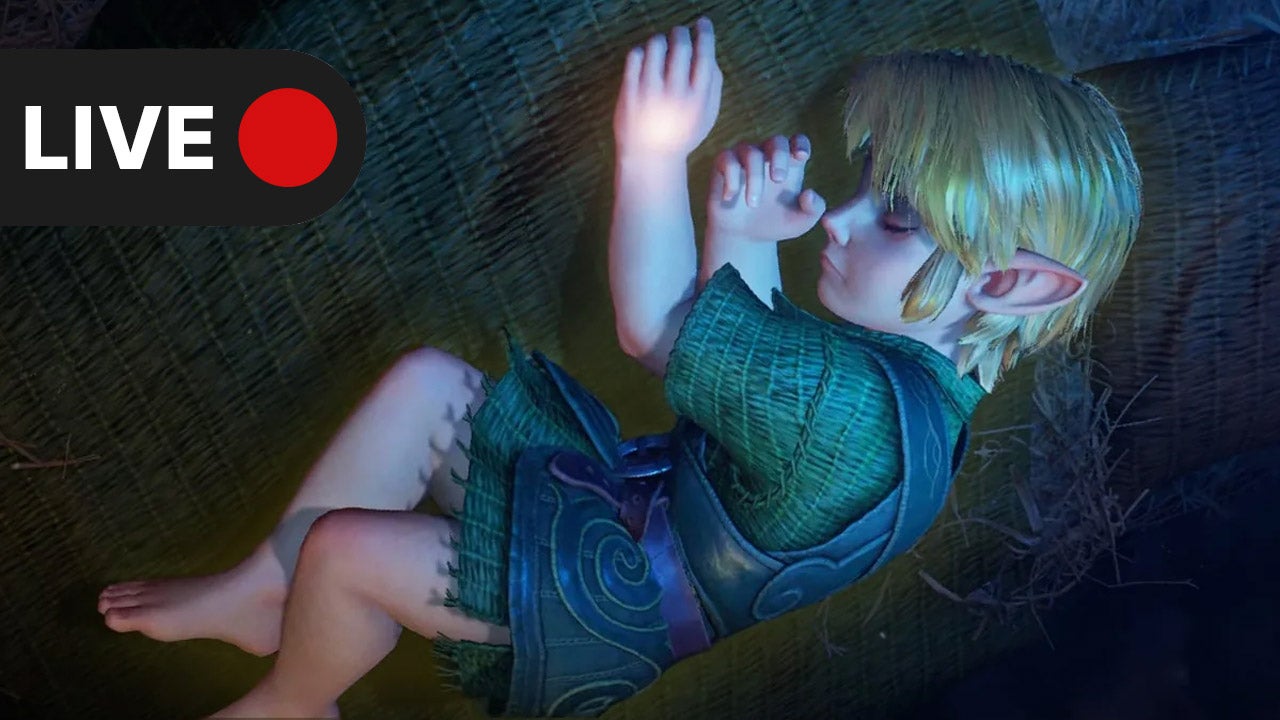
Nintendo pulled back the curtain on its highly anticipated remake of The Legend of Zelda: Ocarina of Time during a dedicated Zelda 40th Anniversary Direct on September 8, giving fans their first real look at gameplay and confirming a November 5 launch date on Switch 2. The roughly 30-minute showcase was almost entirely devoted to the classic 1998 adventure’s modern reimagining, with series producer Eiji Aonuma personally walking viewers through the revamped Kokiri Forest and beyond.
The remake adopts a striking new visual direction described as moody, misty, and fairytale-like — a departure from the Nintendo 64 original that initially divided fans when it was first teased earlier this year. Environments are lush with detail, from the threading on Link’s tunic to sunlight filtering through forest canopies, while the game’s visuals have been completely overhauled down to individual textures. Despite the dramatic graphical leap, Nintendo has kept loading screens intact to preserve the pacing and feel of the original experience.
Beyond the cosmetic overhaul, the remake introduces several meaningful gameplay changes. Link can now manually jump and dash with dedicated buttons — a significant shift from the auto-jump system of the 1998 version. The weapon-switching interface borrows directly from Breath of the Wild, and the day-night cycle now progresses in real time across all locations, including towns. Cutscenes have been expanded with full voice acting for all characters, and one especially inventive feature lets players hum or whistle ocarina melodies into the Switch 2’s microphone to play songs in-game. The physical edition will retail for $70, while the digital version comes in at $60 — and notably, the November 5 release puts it just two weeks ahead of Grand Theft Auto 6.
The Direct also revealed a special Zelda-themed Switch 2 console arriving October 29, featuring green Joy-Cons and Triforce-inspired detailing. Two new amiibo figures based on the remake’s versions of Young Link and Young Zelda were announced, each unlocking in-game masks. Nintendo additionally unveiled a companion app called Zelda Notes, which offers screenshot tools, mini-quests, an ocarina music creator, and a quiz. A real, playable ocarina instrument compatible with the game will also go on sale, alongside a wave of anniversary merchandise, a Lego set, and a replica Master Sword.
Legendary composer Koji Kondo appeared to announce a global Zelda 40th Anniversary Concert Tour spanning Japan, North America, Europe, and Australia throughout 2027, with the first performance scheduled for Tokyo on January 23. Nintendo also showed off the official logo for the live-action Legend of Zelda film, confirmed for an April 30, 2027 theatrical release, though no footage or cast details were shared. Creator Shigeru Miyamoto explained the movie carries no subtitle because it stands as an original work inspired by the franchise.
While the showcase delivered substantial news for Ocarina of Time fans, some observers noted the absence of ports or remasters of other beloved entries like Wind Waker HD and Twilight Princess HD, both of which remain stranded on the discontinued Wii U. There was also no tease of the next mainline Zelda title. Still, with a follow-up Nintendo Direct focused on broader Switch 2 titles scheduled for September 9, Nintendo may have more surprises in store for the weeks ahead.