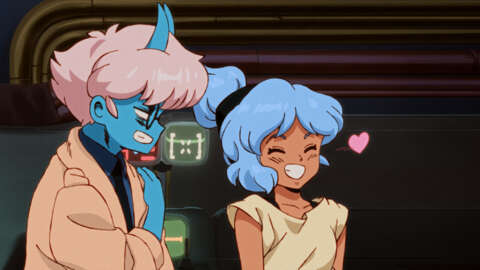
Shapefarm’s upcoming co-op platformer Orbitals is shaping up to be one of the most distinctive indie titles on the horizon, blending handcrafted retro anime aesthetics with tightly designed cooperative gameplay. First revealed at last year’s Game Awards, the game immediately turned heads with its vibrant art style and high-energy presentation. Published by Kepler Interactive — the same label behind Clair Obscur: Expedition 33 — Orbitals features fully animated cutscenes produced in collaboration with Studio Massket, a Japanese animation house known for its work on Attack on Titan, giving the game a level of visual authenticity rarely seen in the medium.
The story follows lifelong best friends Maki and Omura, who set out on a space-faring mission to rescue their settlement fifteen years after a mysterious cosmic storm cut it off from the outside world. The narrative leans into classic shonen storytelling — a tale of friendship, determination, and escalating stakes laced with humor and heart. An early sequence reveals the pair as children being placed into consciousness-uploading machines during a catastrophe, a plot device that cleverly explains their ability to respawn after fatal hits, though the darker implications of this technology may surface later in the adventure.
The road to Orbitals was anything but straightforward. As GameSpot reports, the project began with a team of just six people working on a top-down game starring small robots performing mundane tasks aboard a ship. Everything changed when creative director Marcos Ramos posed a deceptively simple question: “What if anime?” That pivot transformed a little robot into Maki, the game’s spirited protagonist, and set the entire project on a new trajectory. The team has since grown to around 50 developers, and the game has evolved dramatically from its humble origins.
Omura, Maki’s co-lead, proved especially challenging to design. The developers initially built the game around a solo experience with a supporting robot companion, but quickly realized that a true co-op title demanded two equally compelling main characters. Drawing inspiration from iconic anime duos like Goku and Vegeta, the team cycled through numerous iterations of Omura — including, as Ramos revealed with a laugh, one version where the character was a dragon. Perfecting the retro 1980s anime look also required careful study, from the specific placement of facial features to period-appropriate clothing and hairstyles.
The game’s design rests on what Ramos playfully calls its two pillars — retro anime and cooperative play — joking that having only two instead of the industry-standard three makes the team “more efficient.” Game director Jakob Lundgren, a former level designer at Hazelight Studios of It Takes Two and Split Fiction fame, brings deep expertise in co-op mechanics that emphasize communication and asymmetrical gameplay. Hands-on impressions confirm the approach is working: the game authentically captures both the visual charm of classic anime and the warm, childlike wonder of watching Saturday morning cartoons.
With a team whose collective resume spans Naruto to Boruto: Shinobi Striker, Samurai Jack: Battle Through Time, and Hazelight’s acclaimed co-op catalog, Orbitals feels like the inevitable product of its creators’ shared passions. Lundgren noted that earlier versions of the game leaned heavily into being “cool,” but the project found its true identity once the team embraced a blend of earnest charm and serious storytelling — a tone they now simply call “Orbitals-y.” No release date has been announced, but anticipation continues to build for what promises to be a standout entry in the cooperative gaming space.