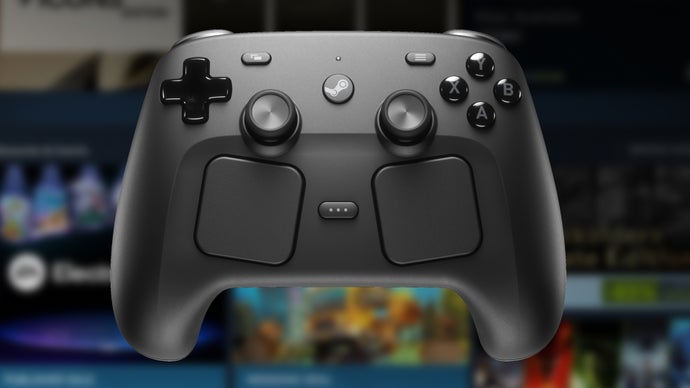
Valve is facing a supply crisis with its Steam Controller barely a month after the peripheral’s official launch. The company has acknowledged that demand for the device has far surpassed its projections, forcing it to overhaul its reservation system and push delivery estimates well into the future. Anyone placing a new order today should not expect to receive their controller until sometime in 2027.
The Steam Controller debuted on May 4 and sold out almost immediately, prompting Valve to introduce a reservation queue just three days later. That system allowed interested buyers to hold their place in line and receive notifications when stock became available. However, Valve has now conceded that its manufacturing capacity simply cannot keep pace with the volume of reservations flooding in, according to a report from Eurogamer.
To provide greater transparency, Valve has introduced three estimated delivery windows displayed on the Steam Controller’s store page: September 2026, December 2026, and a broader 2027 timeframe. Customers who have already secured a reservation can log into their Steam account to check which window applies to their order. The company has promised to refine these estimates as each window approaches, though it offered no guarantees of acceleration.
The reservation queue itself remains active, and Valve will continue notifying customers when their turn arrives. As GameSpot reported, buyers who receive their notification will have a 72-hour window to complete their purchase before forfeiting their spot to the next person in line. Valve emphasized that it has no intention of discontinuing the controller, but urged patience given the gap between supply and demand.
Priced at $99 in the US and £85 in the UK, the Steam Controller has drawn strong interest for its ability to replicate the Steam Deck experience on any PC. It doubles as both a traditional gamepad for couch gaming and a navigation tool that eliminates the need for a mouse in Steam’s interface. Despite generally positive reception, the device has not been without issues — some users have reported rumble compatibility problems with certain games.
The supply bottleneck is compounded by broader challenges facing Valve’s hardware ambitions. The Steam Deck recently saw a significant price increase attributed to ongoing component and memory shortages, and the company is also preparing to launch its Steam Machine console and Steam Frame VR headset later this summer. Whether Valve can scale its manufacturing operations to meet demand across all these product lines remains an open question heading into the second half of the year.