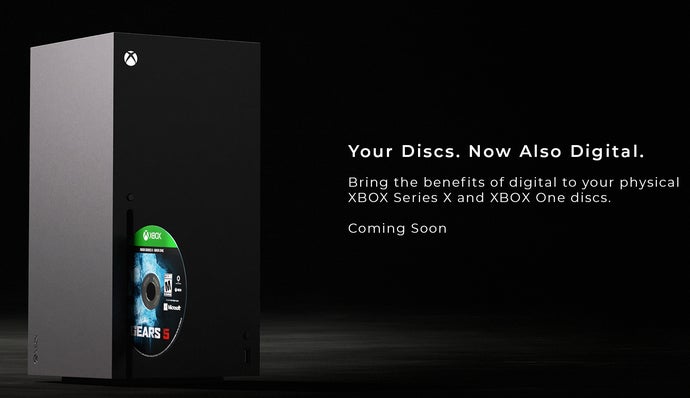
Microsoft is making a significant move to bridge the gap between physical and digital game ownership. The company has officially unveiled its disc-to-digital program for Xbox, which will allow players to convert supported physical Xbox One and Xbox Series X games into digital licenses — no disc required after the initial claim. The feature, first reported earlier this summer, will open up to Xbox Insiders for testing on August 31st, with roughly 1,000 titles supported at launch.
The process is straightforward: insert a compatible game disc into an Xbox One or Series X, and the system will offer the option to claim a digital entitlement for that title. Once claimed, the game can be played without the disc and gains the perks of digital ownership, including Play Anywhere support on PC and access through Xbox Cloud Gaming where available. Notably, the physical disc remains functional even after the digital license is claimed, so owners can still sell or trade it. When a disc is used on a different console, the previous digital license is revoked, and the new owner can claim it for themselves.
Xbox CEO Asha Sharma elaborated on the company’s philosophy in a BBC interview, emphasizing that the goal is to give players flexibility. “I know players love physical media, and I know there’s a lot of benefits in digital media, and I want to make sure people have a choice,” Sharma said. She framed the initiative as part of Xbox’s long-standing commitment to game preservation, noting that maintaining access to purchased games is increasingly important as the industry evolves.
What Sharma notably did not confirm is whether Microsoft’s upcoming next-generation console, known as Project Helix, will include a disc drive. She sidestepped the question but hinted that backward compatibility would continue to be a priority for future Xbox hardware. “You’ll continue to see that as we go forward in the generations,” she said. She also stressed that affordability and efficiency would be central considerations for the next generation of consoles, citing challenges in hardware component costs across the industry.
The timing of Xbox’s announcement is particularly interesting given the competitive landscape. Sony has signaled its intention to move toward an all-digital future for PlayStation, a decision that has drawn considerable backlash from its community. Xbox appears to be positioning itself as the more consumer-friendly alternative by preserving pathways for physical game owners, even as the industry broadly shifts toward digital distribution. Programs like Smart Delivery, Play Anywhere, and now disc-to-digital give Microsoft a narrative advantage in the court of public opinion.
Even if Project Helix ultimately ships without a disc drive, the disc-to-digital program offers a practical safety net for players with large physical collections. By allowing them to convert their libraries now using existing hardware, Microsoft is ensuring those investments are not left behind. For anyone sitting on stacks of Xbox discs, holding onto a Series X or Xbox One console may prove to be a wise decision as the next generation approaches.